"Extinct in the Wild” Partula Snails Begin Journey to Tahiti for Release in the Wild
September 3, 2026
Press Release
Media Contact:
Jeff Sell
Detroit Zoological Society
(248) 336-5757
[email protected]
"Extinct in the Wild” Partula Snails Begin Journey to Tahiti for Release in the Wild
ROYAL OAK, Mich. – Hundreds of tiny snails raised at the Detroit Zoo are beginning a journey of more than 5,000 miles back to the place their species calls home.
This week, 500 adult Partula snails bred and cared for at the Detroit Zoo will leave Royal Oak on their way to Tahiti, where they will be released into their native habitat as part of an international effort to restore Partula snails to the wild. Partula nodosa is currently classified as Extinct in the Wild. Zoo-led conservation breeding and release programs are working to rebuild the species in its native habitat, and researchers have documented wild-born offspring following reintroductions. The Detroit Zoo and its conservation partners continue raising and returning snails to Tahiti to help establish a sustainable wild population.
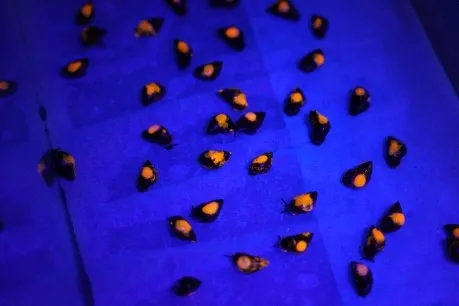
Orange markings on Partula nodosa snails bred at the Detroit Zoo glow under ultraviolet light. The markings will help researchers identify and monitor the 2026 release group after the snails are returned to the wild in Tahiti.
Before they depart, each snail receives a special identifying mark from the Detroit Zoo team: a small orange dot of animal-safe paint on its shell. The paint glows under ultraviolet light, giving conservationists in Tahiti a simple way to identify snails from this year’s release and monitor them after they return to the wild. A new color is used for each year’s release.
The Detroit Zoo has been involved in Partula snail recovery efforts since 1989, working alongside zoos and conservation partners to breed snails and help return them to their native habitat. The Detroit Zoo has successfully raised and released thousands of Partula snails into the wild in Tahiti.
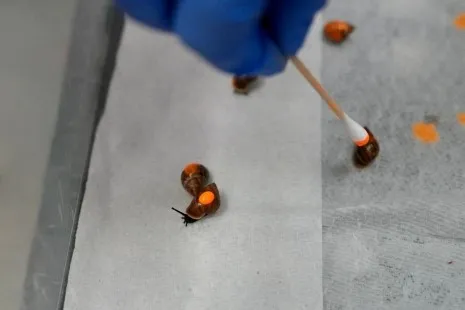
Detroit Zoo animal care staff apply a small dot of animal-safe paint to Partula snails before its journey to Tahiti. A different color is used each year to help researchers identify snails from individual release groups.
“It’s hard not to get a little attached when you’ve watched these tiny snails grow here at the Zoo,” said Mark Vassallo, curator of amphibians for the Detroit Zoological Society. “Sending 500 of them off to Tahiti is a moment our team has been working toward for a long time, and knowing the care happening here in Detroit can help return this species to the wild is incredibly rewarding.”
Partula snails are small, tree-dwelling snails native to islands in French Polynesia. Wild populations were devastated after the introduction of the predatory rosy wolf snail, which had been brought to the islands to control another invasive snail species. Some Partula species eventually disappeared from the wild altogether.
Partula snails play an important part in Polynesian cultural heritage, with the snails, each with a unique shell, representing the different islands. The work of Detroit Zoo and partners in the broader international recovery program are helping restore a part of Polynesia’s cultural heritage while strengthening the ecosystems. They have now returned 11 Partula species once considered extinct in the wild to their native islands. More than 17,000 snails have been reintroduced through the collaborative effort.
For the Detroit Zoo team, this week’s departure is another chapter in a conservation effort that has stretched across decades and thousands of miles, connecting the daily care of snails in Royal Oak with their recovery in the forests of Tahiti.
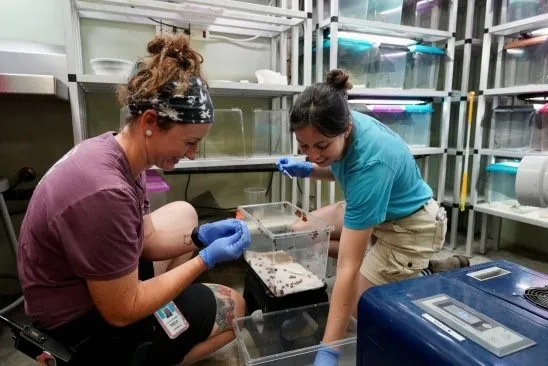
The Detroit Zoo animal care staff prepare the snails for their upcoming journey to Tahiti, where they will be released into their native habitat.
About the Detroit Zoological Society:
The Detroit Zoological Society – a renowned leader in wildlife conservation, animal welfare, environmental sustainability and humane education – operates the Detroit Zoo and Belle Isle Nature Center. One of Michigan’s largest paid family attractions, the Detroit Zoo in Royal Oak hosts more than 1.3 million visitors annually. Its 125 acres of award-winning naturalistic habitats are home to more than 2,000 animals representing more than 200 species. The Belle Isle Nature Center sits on a 5-acre site on Belle Isle State Park in Detroit. For hours, prices, directions and other information, call (248) 541-5717 or visit detroitzoo.org.