A Bug's Life: Meet the Zookeeper who Raises the Insects That Feed the Zoo
June 21, 2025
Articles
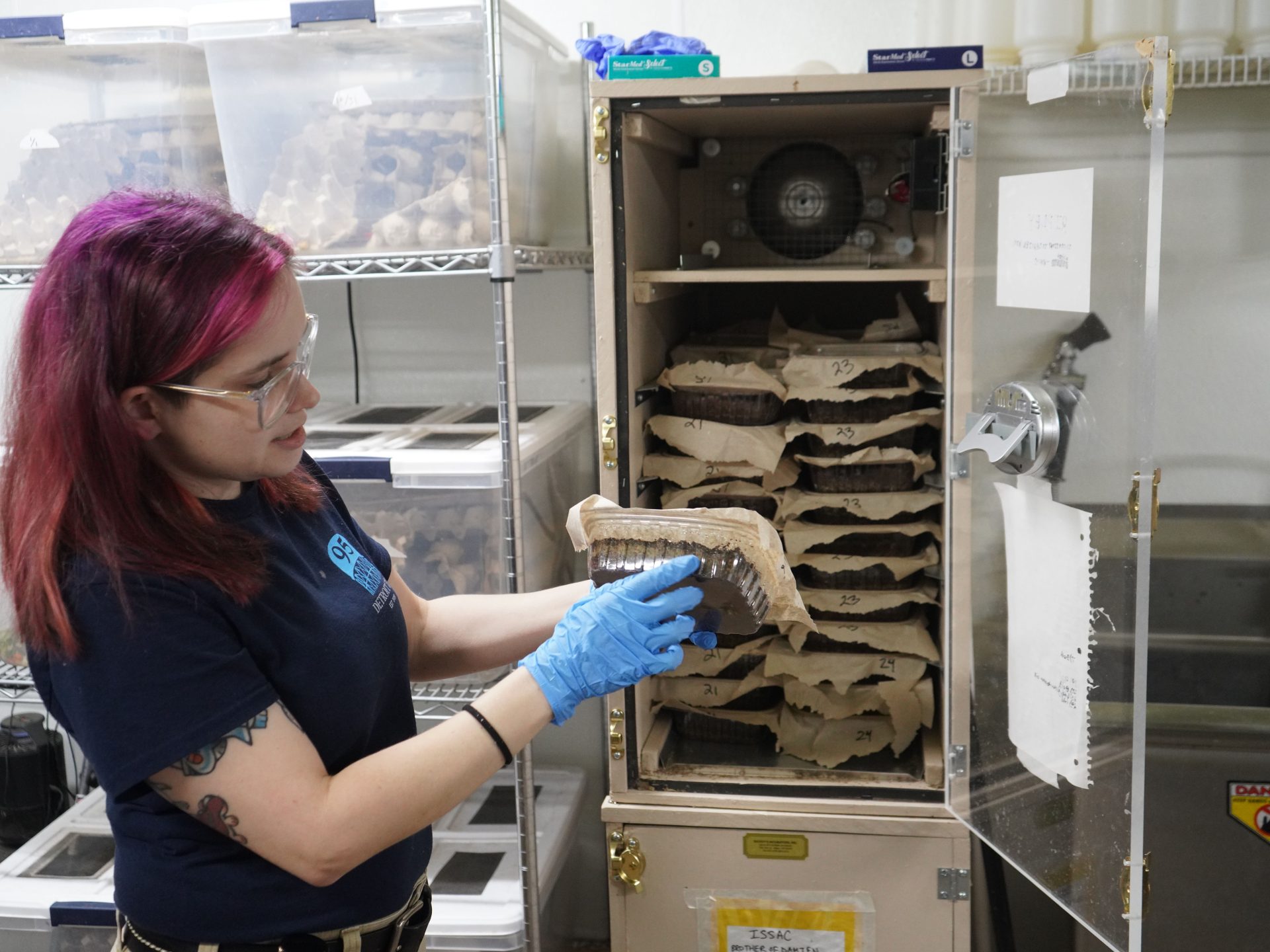
With millions of mouths to feed and care for, Zookeeper Emily Rycerz’s job is one of the biggest at the Detroit Zoo — and in some ways, one of the tiniest.
Tucked inside a small room in the Zoo’s commissary building, Rycerz tends to colonies of crickets and cockroaches. Though not the flashiest or freshest-smelling assignment, Rycerz’s job is vital. The bugs in her care go on to be food for the animals who call the Zoo and Belle Isle Nature Center home — from the smallest amphibians to the biggest bears.
“Bugs are an important part of a lot of animals’ diet,” Rycerz says. “Amphibians, for example, need live enrichment and live food. It’s really cool to be a part of their well-being by raising their food.”
When Rycerz started her zookeeping career, she came with a love and passion for amphibians — but she never imagined it would lead to her spending her days surrounded by the constant hum of crickets. Now, she calls that chirping her soundtrack, and she wouldn’t have it any other way.
“I’ve definitely grown a bigger appreciation for bugs’ place in the food web —
especially for amphibians who won’t recognize something as food unless it moves,” she says. “A lot of work goes into this job, but it’s worth it.”
The commissary’s “bug room” is carefully organized with rows of tubs containing bugs at various stages in their life cycles. Whether it’s a freshly hatched cricket the size of a speck of dust or a cockroach the length of a finger, Rycerz checks their health and progress and cleans their habitats daily.
Though the crickets and cockroaches will eventually become food for other animals, Rycerz still provides them with top-quality care, ensuring they have everything they need to be comfortable and healthy. After all, the healthier the bug, the healthier the animal who eats it.
“The bugs really need a lot of consistency,” Rycerz says. “They need to be clean and dry to be at their best. We give them fresh produce and this mix called ‘bug burger’ to give them as much nutrition as possible. We give them nutritious food so those vitamins are in their bellies — just like the bugs animals eat in the wild.”
After the bugs are successfully raised, they are distributed to animals all across the Detroit Zoo and Belle Isle Nature Center, even in places they might not be expected. Amphibians, birds and reptiles are the main diners at the bug buffet, but even mammals enjoy the occasional taste.
“Even I was surprised to learn how many mammals get bugs and crickets,” Rycerz says. “Some eat them as part of their regular diet, but the grizzly bears and polar bears sometimes get them for enrichment and play. I heard one of the female polar bears picks the crickets up like popcorn with her paw.”
Though amphibians will always be her favorite, Rycerz takes pride in knowing that so many different animals benefit from the bugs — and the role she plays. Even after clocking out, her mind often stays in the bug room, brainstorming new and better ways to keep the colonies thriving so the animals who depend on them can, too.
“When I was younger, I dreamed about being a zookeeper, but I never thought about how the animals were fed, especially frogs and lizards,” she says. “So much goes into it, but it’s really fun and rewarding.”