Helping Suka Beat the Itch: Treating Allergies in an 800-Pound Polar Bear
July 7, 2025
Animals
By Dr. Wynona Shellabarger, DZS veterinarian
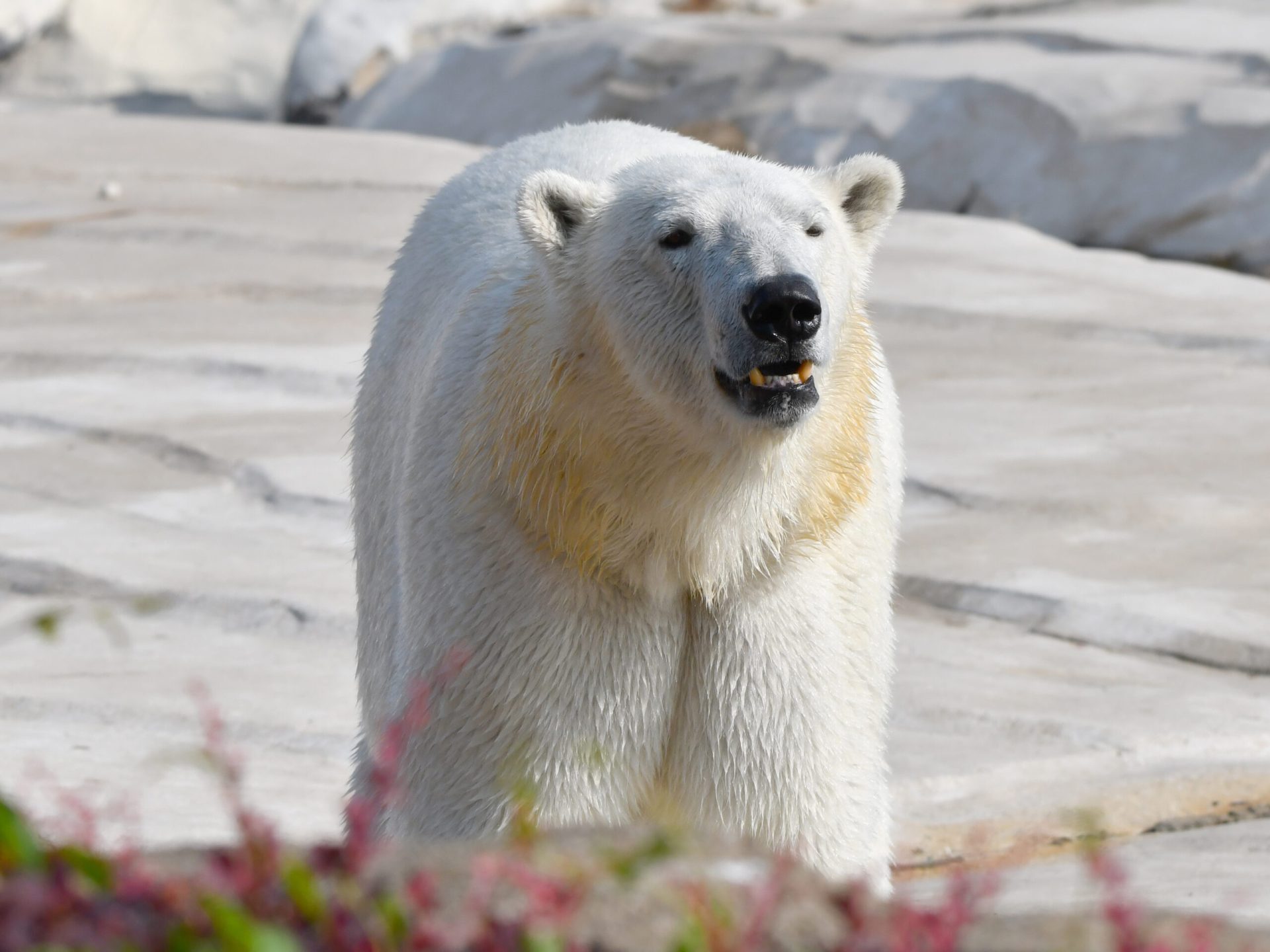
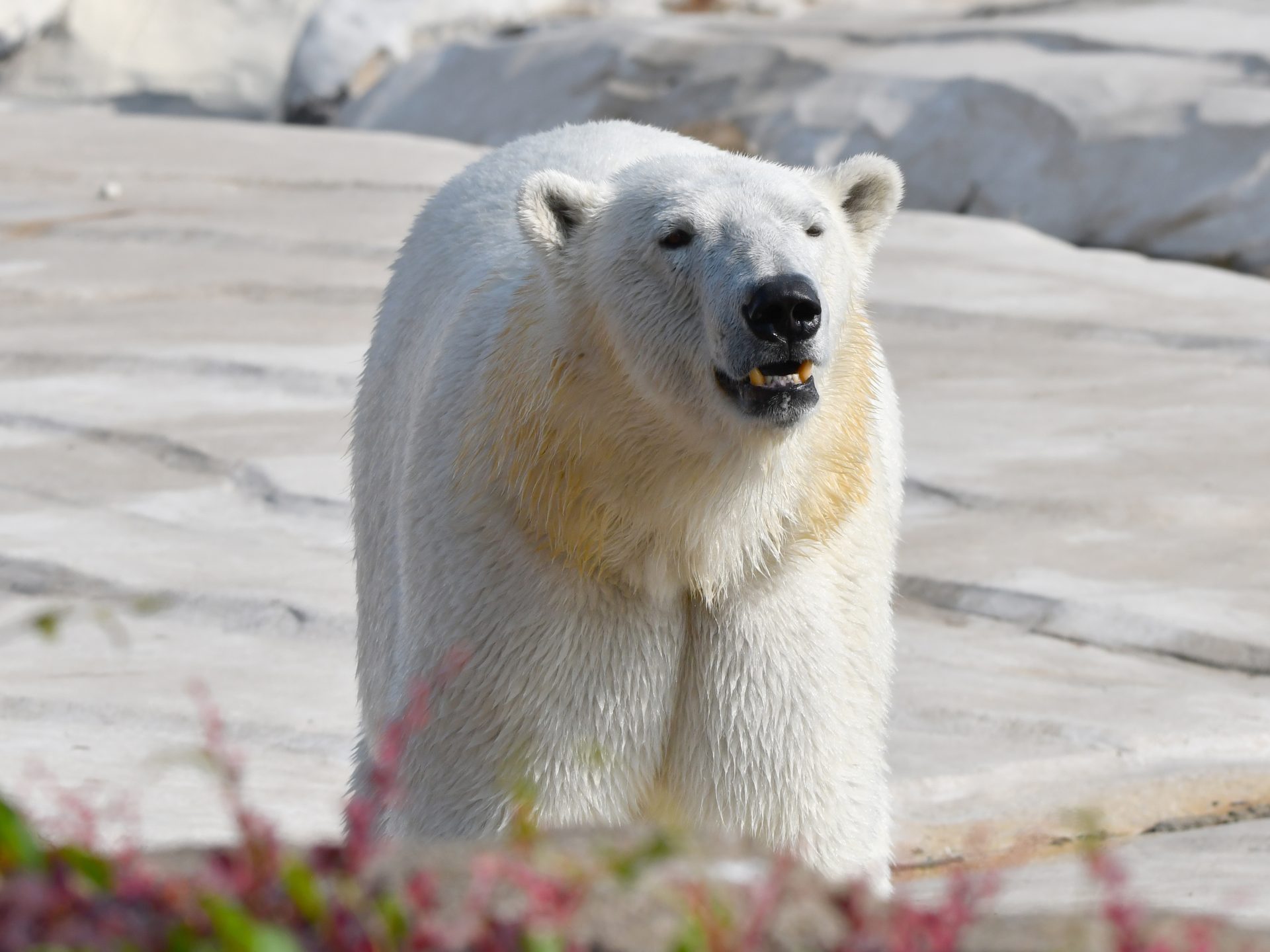
For those of us who are familiar with seasonal allergies like hay fever, or who have an itchy pet at home that incessantly rubs, rolls, licks their feet, shakes their head or scratches frequently due to allergy conditions, you will undoubtedly appreciate Suka the polar bear’s story. Imagine one of these conditions — only in an 800-pound polar bear!
What is an Allergy?
When an animal (or person!) becomes allergic to something, they mount a hypersensitive immune response, usually involving overproduction of specific antibodies over time as they are exposed to the substances they react to (called allergens). These antibodies then bind with the allergens as they enter the bloodstream and cause a series of reactions within the body that may result in inflammation of the skin, ears, gastrointestinal tract, cardiovascular system and/or respiratory tract. There are hundreds of ordinary substances, both in the environment (such as grasses, pollen, insects, molds, dust and mites) and in food, that can trigger this response in those who are prone to allergies. Genetic and environmental factors can contribute to susceptibility, and every animal has their own unique combination of allergic triggers.
Suka’s Condition
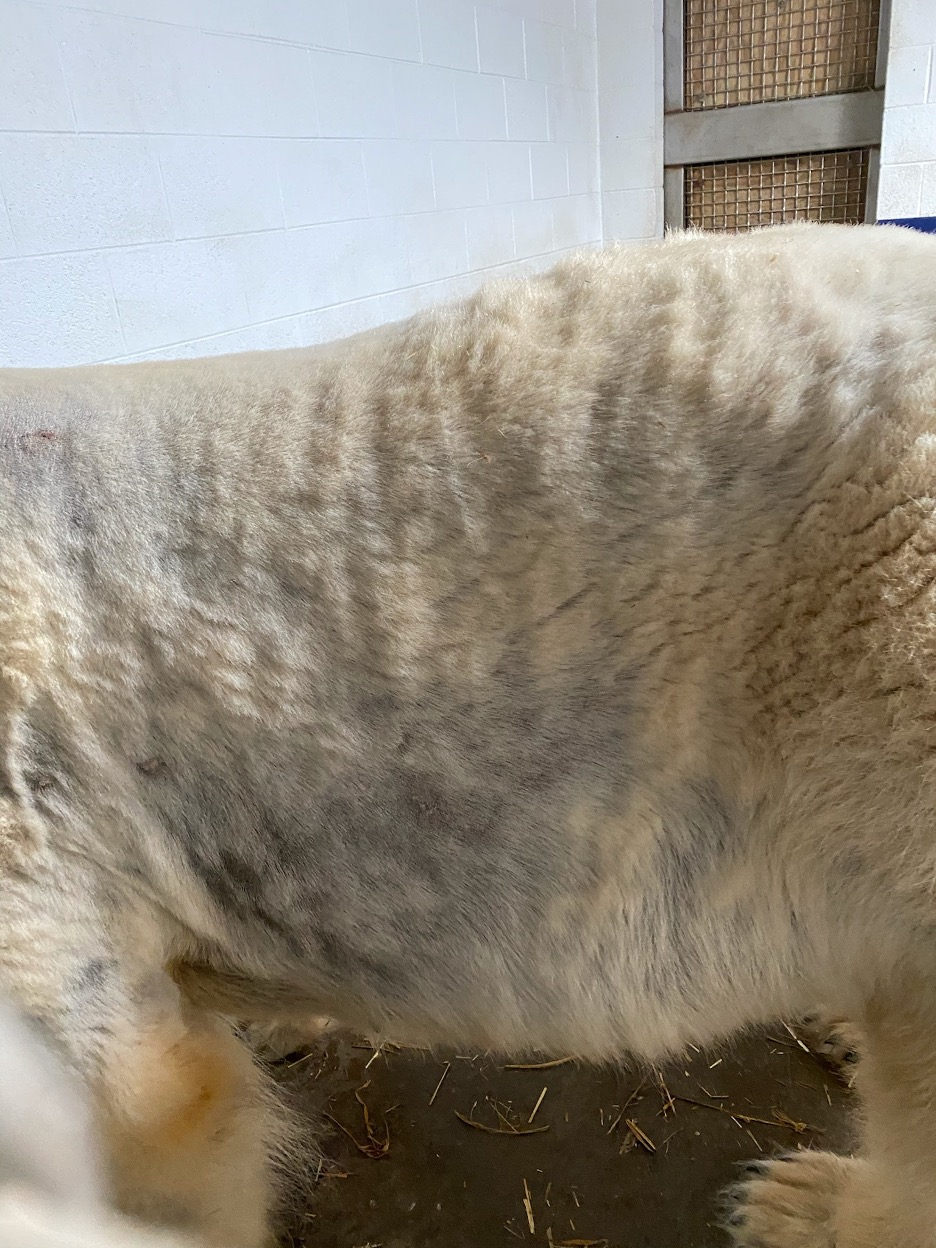
Polar bears are one species known to be susceptible to the development of allergies, particularly those affecting the skin and gastrointestinal tract. We started to suspect something was amiss with Suka, a 13-year-old female polar bear, when she was about 7 years old. Staff noticed that she became “very itchy” after she emerged from her maternal den in 2019. She was rubbing various body parts against different structures in her habitat and holding spaces. Her zookeepers observed Suka scratching her sides, shoulder and neck areas with increasing frequency, to the point where she was breaking guard hairs off and creating bald patches. She was treated with a variety of standard oral allergy medication regimens, including antihistamines and steroids, but responses were limited and short-lived. She showed the most improvement with oral steroid medications, but long-term steroid use is not recommended due to other potentially harmful side effects. By fall 2020, her hair coat had grown back in, and she was much more comfortable. As we weaned her from the steroids, however, her allergic dermatitis condition returned, and she was scratching and losing hair all over again. It was time to consult with a veterinary dermatology expert.
Veterinary Dermatologist Consultation
Enter Dr. Annette Petersen, a faculty member for Michigan State University’s College of Veterinary Medicine and specialist in veterinary dermatology. We discussed Suka’s history and presentation and felt that her condition was most likely caused by exposure to environmental allergens or atopic dermatitis. We cannot prevent exposure to most of these, as they are all around her in her environment, so we decided to consider immunotherapy, a treatment that attempts to mitigate her allergic reaction through desensitization, commonly known as “allergy shots.”
Immunotherapy works by gradually introducing increasing doses of allergen into the animal, allowing them to develop tolerance to the allergen over time and reduce uncomfortable clinical manifestations. This is usually done by injecting small doses of a formulated allergy serum specific to the animal under the skin, or in some cases, by placing small drops under the tongue. The length and dose of treatments vary with the patient, but if there is a good response, the animal may require immunotherapy for life.
Skin testing, also known as skin-prick testing, is the gold standard used to determine which allergens make up the treatment serum for a particular animal with skin allergies. A small amount of a specific allergen is introduced via injection into the skin layers, and the dermatologist then monitors the area for a skin reaction that resembles a mosquito bite in appearance and feel. This indicates that the animal’s immune system is sensitized to that antigen and the animal is allergic to it, making it a good choice for the allergy serum.
Suka’s Exam
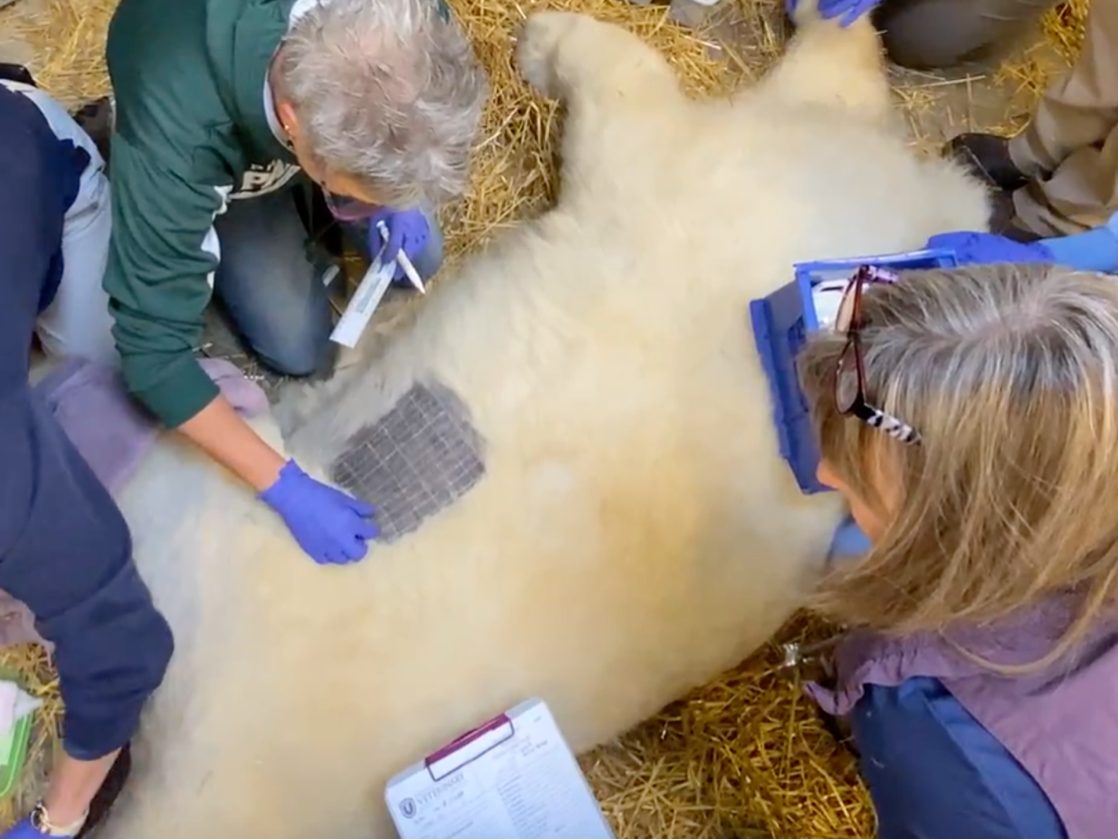
To perform this skin testing and other diagnostics for Suka’s skin condition, a full exam under general anesthesia was planned, with Dr. Petersen performing the allergy skin testing. Like the procedure done in people, dogs, and cats, once Suka was asleep, a 20 x 20 cm rectangular patch of skin over her side was prepared. The area was shaved, prepped, and a special grid was made for placement of sixty-eight different intradermal allergen injections. Allergen selection for testing was based on allergens with which she would commonly come into contact in our area. These included various trees, pollen, weeds, grasses, mites, dust and many other common allergens. Suka reacted strongly to almost all of these!
Armed with these test results, Dr. Petersen formulated a specific allergy serum comprising more than 50 allergens for Suka and prescribed a series of allergy serum treatments over time, tailored to her skin test reactions. We were able to deliver the treatments in a special oral formulation, which animal care staff could easily administer daily. She has been very cooperative with these treatments!
Outcome
We are pleased to report that Suka has been receiving allergy serum treatments daily for almost three years now and has responded very well! She has a thick, full hair coat and is much more comfortable now! This is not always the case with this condition, so we count Suka among the lucky ones. We will continue to monitor Suka for new or emerging sensitivities and recognize that we may need to reassess her at some point in the future. However, for now, we are quite pleased with her response.
We have since utilized Dr. Petersen’s expertise in assessing a suspected allergy condition in one of the lions who call the Zoo home. We are pleased and grateful for her continued assistance and expertise with these challenging skin conditions.