How Innovation is Helping to Save the Panamanian Golden Frog
February 2, 2026
Animals
By Mark Vassallo, Curator of Amphibians
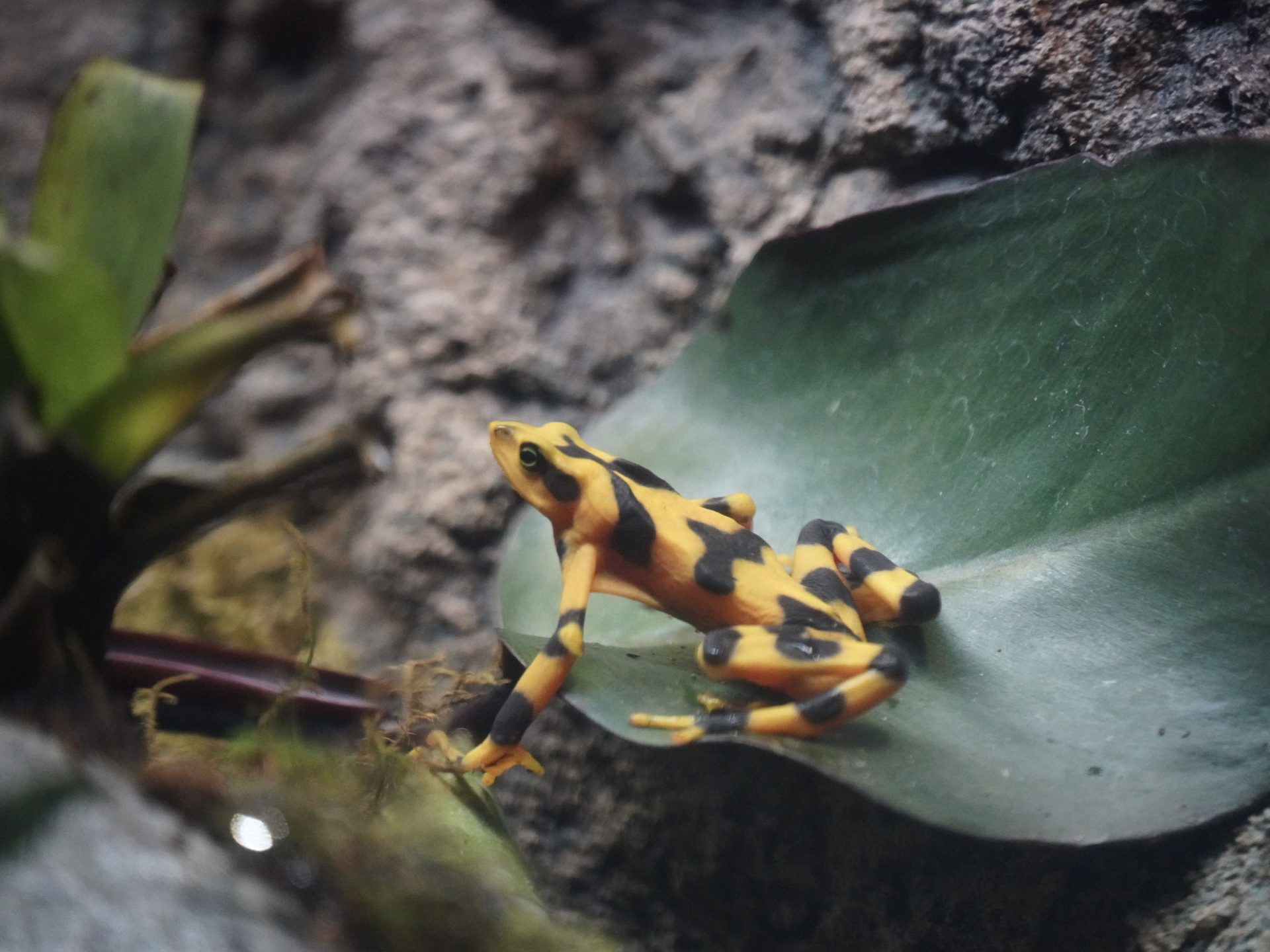
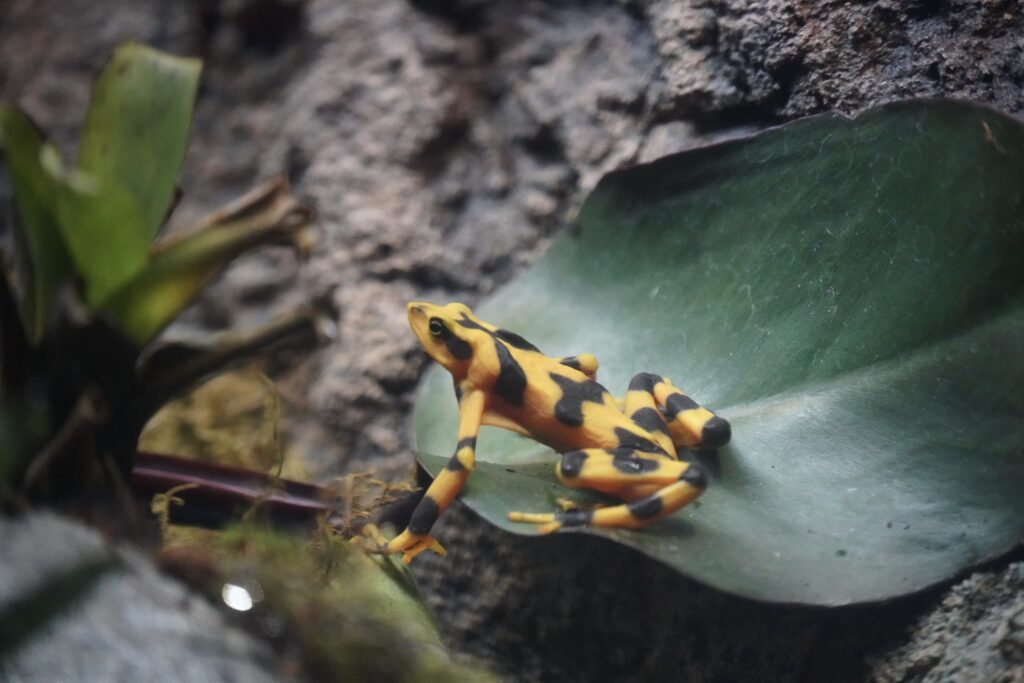
The cloud forests of Central Panama have always been a noisy place. The sounds of birds, insects and amphibians fill the air but one particular amphibian, the Panamanian golden frog has not been heard in these forests for almost 20 years. The golden frog has fallen victim to several environmental threats that have caused this bright yellow and beautifully patterned frog to disappear from the choruses of the cloud forest. One particular threat, a parasitic fungus known as chytrid, has all but wiped this animal out from its former range within the central highlands of Panama. Being not only an important part of the environment but also a symbol of national pride, autonomy and luck, something had to be done to conserve this precious amphibian.
Saving a Species
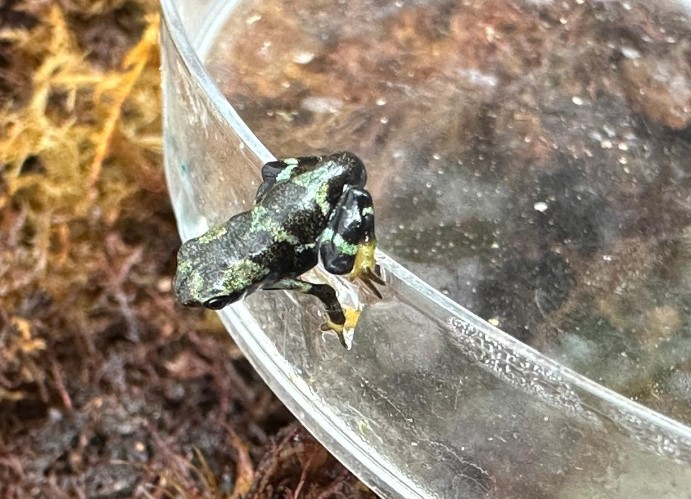
Luckily, in the early 2000s when faced with the prospect of potentially losing this beautiful and important member of the ecosystem, the El Valle Amphibian Conservation Center Foundation (EVACC) began expeditions into the cloud forest to rescue the last of the golden frogs in order to keep them safe within bio secure colonies managed by the foundation. With careful diligence the group and their partners from several Association of Zoos and Aquariums (AZA) institutions began learning everything they could about the care and breeding of this critically endangered amphibian. Once protocols were established for the breeding and care of the golden frogs, many were then sent to AZA institutions in the United States to establish an assurance colony and manage the genetics of the species. EVACC retained some of the most genetically valuable animals in their modified shipping container labs in El Valle, Panama. Unfortunately, with the chytrid fungus still ubiquitous in the environment, it would be difficult to release this species back into the wild without the potential of this disease decimating the introduced golden frogs.
A New Approach
I began traveling to El Valle in 2015, eager to help this Panamanian-led effort to conserve the golden frog and help brainstorm how to reintroduce them back onto the landscape of Central Panama. For many years, I worked to improve the infrastructure of the labs, update life support and help the EVACC team with husbandry and care. This year, however, we had an ambitious plan to move a group of golden frog tadpoles into an enclosed outdoor space, which is shielded from predators but allowing the natural light and rain of the environment to penetrate into the outdoor enclosure. For the first time in almost 20 years, the golden frogs will feel the sun and rain of their cloud forest home on their skin again!
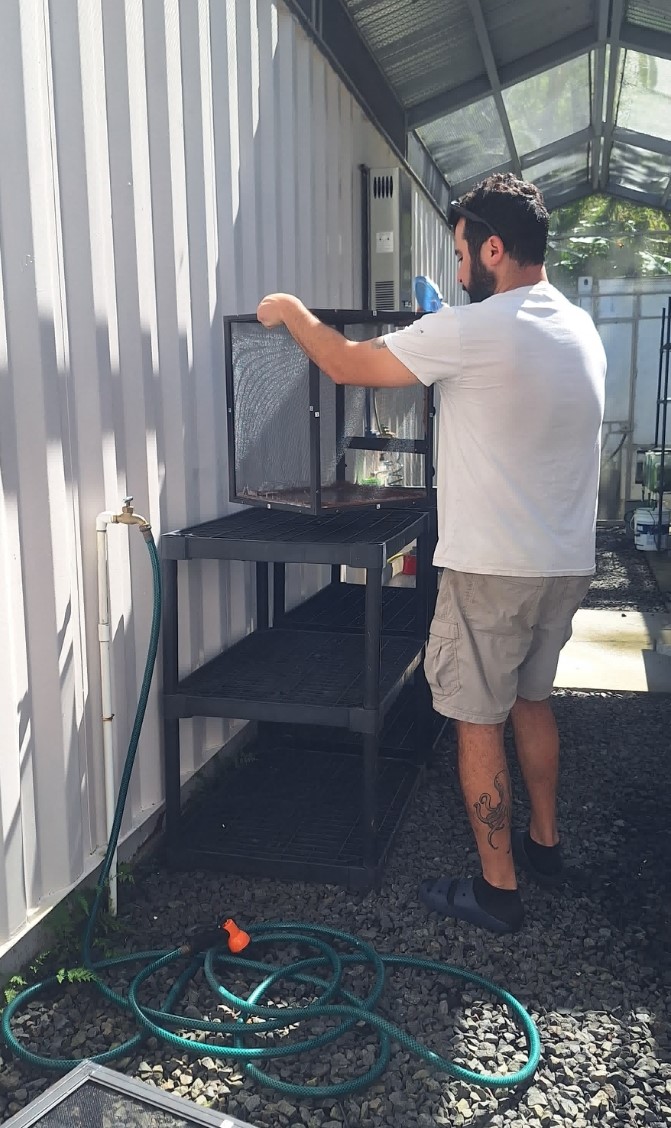
Upon arriving, our team began repairing some minor issues with the outdoor enclosure. There was extensive painting done to prevent rust and some of the netting and metal framing was in need of repair. Once this was completed, focus was put into building multiple shelving units and open screen habitats for metamorphosed tadpoles to move into. The work was hard, and the environment was unforgiving with gusty wind and rain squalls that threatened to blow me off the roof of the enclosure. Bearing down, the team and I were able to complete the work just in time to see the first metamorphosed golden frogs being placed into the habitats. To see this extremely rare animal brought to the brink of extinction stand up on a piece of wood and soak in the light rays pouring through this brand-new outdoor setup, I could not help but feel the emotions of a struggle spanning nearly 20 years finally taking steps to put the golden frog back where it belongs.
As we drove out of the mountains and I peered into the rearview mirror, I could see the clouds forming on the peaks and knew that those first little Golden Frogs were likely about to experience their first natural rainstorm on their native soil, and I felt a surge of satisfaction.
Looking Toward the Future
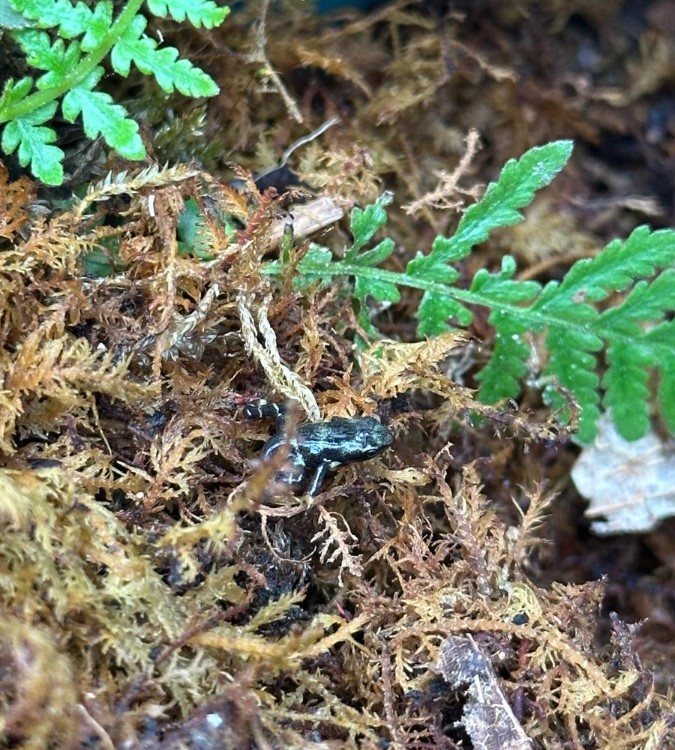
Despite this feeling of accomplishment, I knew that there was much work to be done. First and foremost, this group of golden frogs will be studied extensively. The EVACC team and their group of AZA partners will be comparing growth rates, survivorship and overall health of this outdoor group as compared to groups being raised inside the shipping container labs. As the project evolves, the team will eventually begin to evaluate the ability of these outdoor raised golden frogs to remain healthy while still being raised outside. The plan is to measure levels of infection from the chytrid fungus and evaluate the potential to undertake a soft release of this species, meaning that animals would be released in a controlled area in the forest and monitored.
Although this portion of the project is just getting started, it is an important step in reintroducing golden frogs back into the wild. With a little of its own trademark luck and the continued dedication of the EVACC foundation, the Detroit Zoo and its partners, perhaps this little golden frog will strike up with the choruses of the cloud forest again.