From Detroit to the Atlantic Forest: A Master’s Journey with the DZS & Project Dragonfly
January 9, 2026
Blogs

By Kendall Brabandt, Sustainability Intern
The Detroit Zoological Society (DZS) is the newest site for the Advanced Inquiry Program (AIP), an accredited master's degree offered by Miami University's Project Dragonfly. The AIP is designed specifically for working professionals who wish to earn either a Master of Arts in Teaching (M.A.T.) or a Master of Arts (M.A.) in Biology, with a schedule that is much more flexible than a traditional graduate program. The curriculum utilizes a unique hybrid model that combines graduate coursework with local, hands-on experiences, allowing students to earn a master’s degree while remaining in their current career. The entire program is guided by Project Dragonfly's core focus on conservation, which is built upon four main tenets: Inquiry, Environmental Stewardship, Community Engagement and Voice, and Local and Regional understanding.
A National Network with Global Reach The DZS is one of 10 zoos and botanical gardens across the United States to host the AIP. This extensive network forms the largest collaborative learning environment of its kind, connecting students with peers, faculty and conservation experts nationwide. Detroit’s AIP participants can learn alongside students from other sites, including those in Chicago, Cincinnati, Cleveland, Denver, Jacksonville, New York, San Diego, Seattle and St. Louis, and Global Field Program participants from anywhere in the country. By being part of this expansive network, students gain access to a broad range of professional connections and shared conservation knowledge.
To further enhance the experience, this curriculum offers the unique option of integrating Earth Expeditions into the degree path. These two to three weeklong immersive field study courses provide students with international experiences at conservation sites around the world, such as in Africa, Asia, Australia or South America. This component ensures the AIP effectively bridges local, community-based inquiry with a global understanding of conservation efforts and biodiversity challenges, transforming participants into well-rounded conservation leaders.
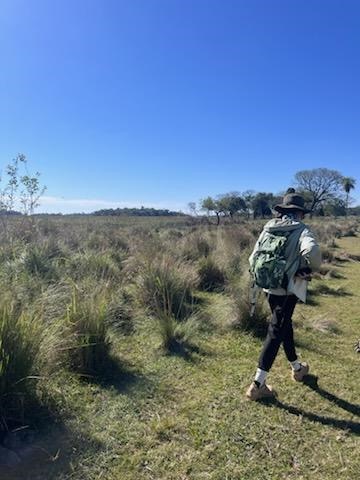
A Student's Journey: From Engineering to Conservation
This comprehensive approach is exactly what led me to where I am today. As a member of the inaugural AIP cohort at the Detroit Zoological Society, I joined the program in 2023 with a background in Civil and Environmental Engineering and a goal of shifting my professional focus toward community-based conservation. Today, I work within the Sustainability department here at the DZS—a transition that, for me, illustrates the program's success in cultivating and supporting new conservation leaders.
Paraguay: Lessons from the Atlantic Forest
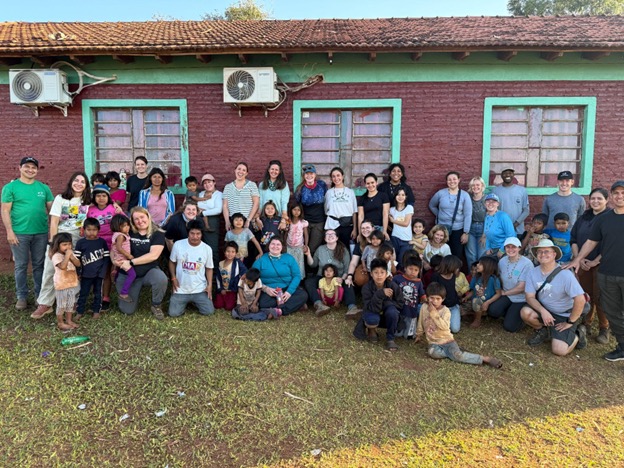
I recently took advantage of the option to participate in an Earth Expedition, and it was a life-changing experience. My journey took me to Paraguay for two weeks, where I lived, studied and worked alongside 17 other Project Dragonfly students and a local nonprofit organization called Para la Tierra. This organization was founded by a Project Dragonfly alumnus in 2010 and now serves as a hub for researchers and community leaders. Their work is expansive, including publishing peer-reviewed papers on the Atlantic Forest, researching hooded capuchin monkeys, hosting international interns, teaching local students about their environment and supporting indigenous communities.
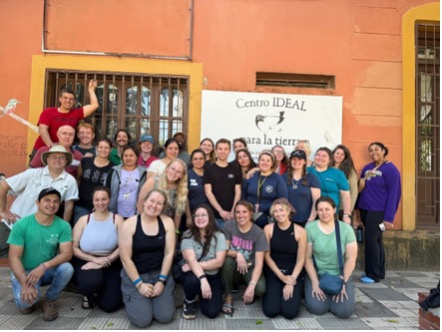
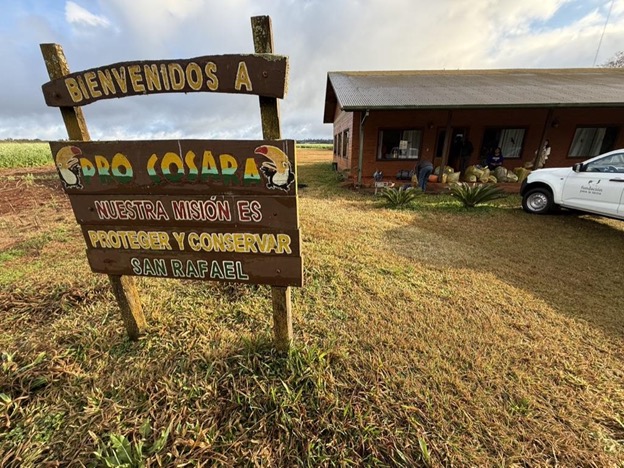
We divided our time between two key locations. We spent the first half in San Rafael, home to the largest remaining Atlantic Forest patch in Paraguay. Only 7% of the original forest cover in Paraguay still remains, much of it fragmented. This forest is home to 23,000 species of plants, 40% of which are endemic, and more than 2,200 species of animals, of which 31% are endemic. Here, we ventured into the forest, witnessing firsthand the fragmentation caused by massive commercial soy farming, and visited local indigenous communities. The second half of our experience took us to Pilar, a small town in Southern Paraguay that has become Para la Tierra’s headquarters. In Pilar, we helped organize an Eco-Club event for local youth, something that Para la Tierra hosts every Saturday in the community square. We also spent time observing howler monkeys, learning how local politics impact conservation efforts and cataloging species in the organization’s extensive museum, the largest of its kind in Paraguay.
One of the main takeaways from this experience is the devastating impact of unregulated resource exploitation on both communities and the environment. Commercial soy farming has dramatically impacted indigenous communities and irreversibly damaged the ecosystem in Paraguay, which is home to some of the most biodiverse forests in the world. Seeing the effects of these complex issues firsthand allowed me to directly apply the AIP tenets of Inquiry and Local Understanding to the challenges facing the Atlantic Forest ecosystem. By collaborating with local communities and researchers, our group focused our inquiry on vital issues like sustainable agriculture and local economic development as they relate to forest conservation.
One of the main takeaways from this experience is the devastating impact of unregulated resource exploitation on both communities and the environment. Commercial soy farming has dramatically impacted indigenous communities and irreversibly damaged the ecosystem in Paraguay, which is home to some of the most biodiverse forests in the world. Seeing the effects of these complex issues firsthand allowed me to directly apply the AIP tenets of Inquiry and Local Understanding to the challenges facing the Atlantic Forest ecosystem. By collaborating with local communities and researchers, our group focused our inquiry on vital issues like sustainable agriculture and local economic development as they relate to forest conservation.
Seeing Para la Tierra’s long-term commitment firsthand provided tremendous hope and inspiration. The organization’s continued, impactful work with local people demonstrates how strong community collaboration can lead to genuine, sustained conservation wins, even against enormous economic pressures. As one of my classmates wisely observed, "A little can do a lot." This inspiring model is the most important lesson I’m bringing back to my work here in southeast Michigan: positive actions, no matter how small they may seem, provide a catalyst for change that is invaluable. This international immersion, available as an elective for all AIP students, provided a real-world, global context for the conservation skills I developed through my local coursework at the Detroit Zoo.
Take Action: Join the AIP and Learn More Feeling inspired by this journey and ready to turn your passion into purposeful action? The Advanced Inquiry Program is continuously seeking motivated professionals, educators and community leaders ready to become champions of change. Whether you are driven to address local conservation challenges in southeast Michigan or explore global issues through a life-changing Earth Expedition, the AIP provides the structure and network to support your goals, while allowing you to earn a graduate degree catered to your own interests and schedule.
To learn more about the program, its philosophy and how to join the next cohort at the Detroit Zoological Society, please visit the Project Dragonfly website. You can find information and application materials here: https://detroitzoo.org/advanced-inquiry-program/.
You can also learn more about the crucial conservation work being done by some of the conservationists in Paraguay. Explore the mission and projects of Para la Tierra here: https://www.paralatierra.org/