Construction is ongoing along key routes to the Zoo. Before you head out, check MI Drive for current conditions and consider an alternate route if needed.
Reptile Zookeepers Bring Artistry to Habitat Design
September 9, 2026
Blogs
By Sarah Culton, Communications Manager
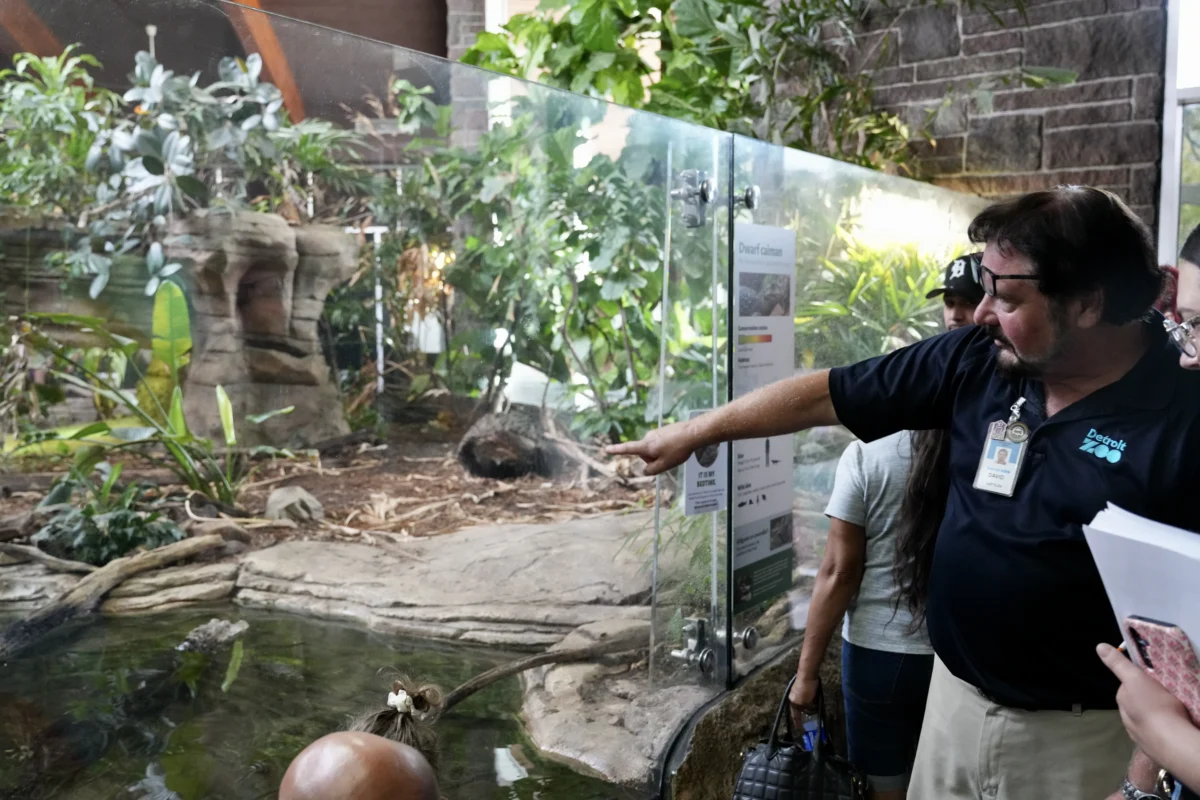
David Blanchard doesn't consider himself an artist.
When onlookers compliment his work, he brushes it off. When asked about his inspiration, he shrugs.
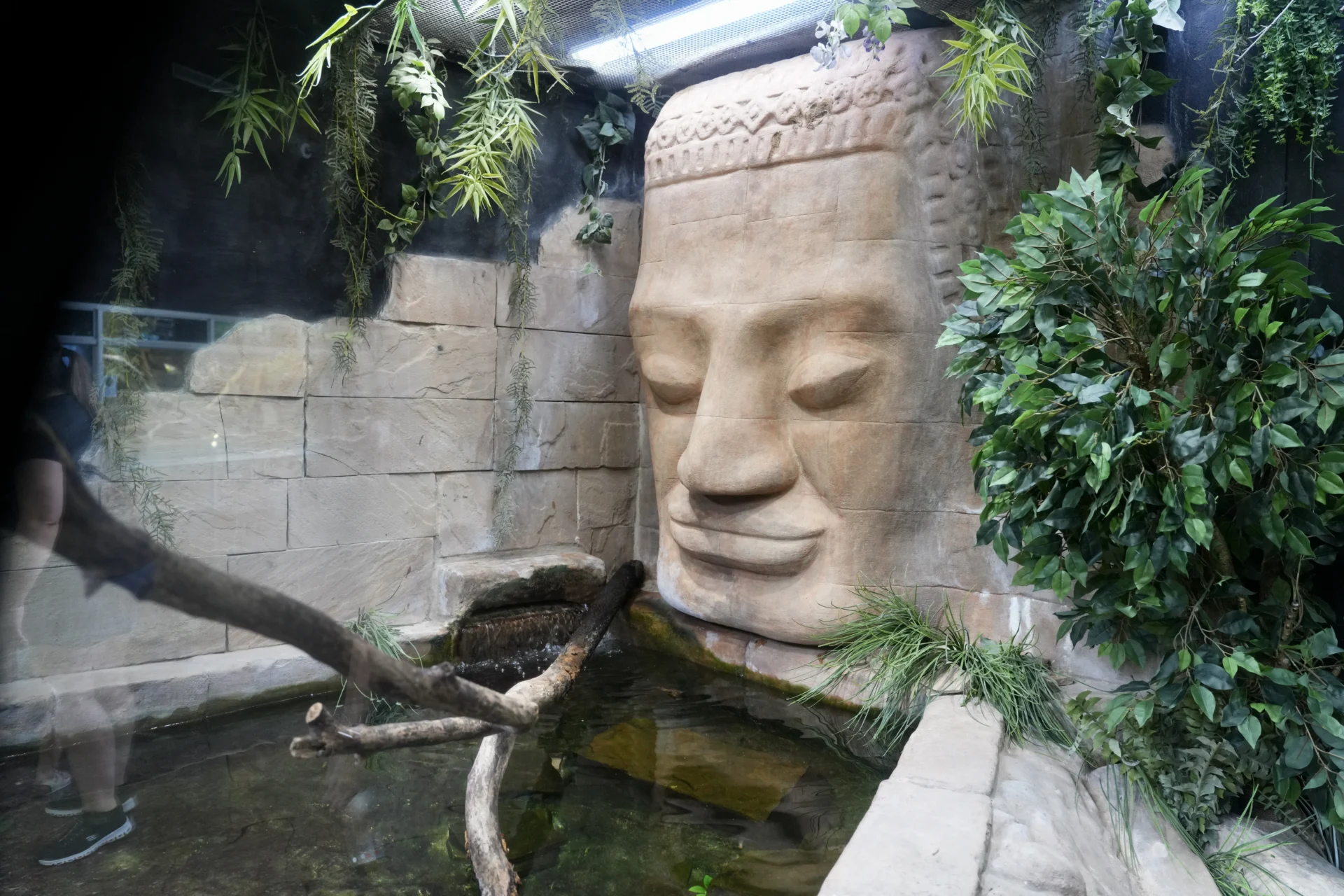
But when a reticulated python slithers beneath one of his largest pieces — a massive face that you might think belongs in a zen garden — he can't help a small smile.
"We do this for the animals," says Blanchard, a reptile zookeeper at the Detroit Zoo. "Trying to put things together in ways that feel natural and work for [the reptiles] is the whole point. Our first priority is always to make the reptiles feel comfortable."
Artist or not, Blanchard's touch can be seen in nearly every habitat inside the Detroit Zoo's Holden Reptile Conservation Center. He is part of a reptile team that contributes to habitat design — from crafting massive, involved habitats to installing smaller plants and natural substrates.
These designs do more than improve the Conservation Center's aesthetics. They also help improve the lives of the animals who call the Zoo home. Habitats that mimic a reptile's natural environment — from sandy dunes for Aruba Island rattlesnakes to wooded, marshy homes for the eastern box turtles — let them engage in natural behaviors.
A lifelong lover of reptiles, Blanchard has been designing enriching habitats for his cool-blooded friends for nearly as long as he can remember. He's spent decades reading books, studying natural habitats and finding ways to enhance reptile environments. At some point, it became second nature.
"As a kid, I was always setting up aquariums and terrariums," he says. "That's how I got started."
For the last 30 years, he has used his skills at the Detroit Zoo. One of his biggest pieces is the giant face that looks out from the reticulated python habitat. Blanchard says that piece took him an entire summer to craft from concrete. But that's just one of many habitats that showcase his artistic touch.
Blanchard has built rock-like structures from concrete and wire framing. He has studied natural substrates and plants, stained rocks and painted skies — all to give more than 50 species of reptiles the best home they can have.
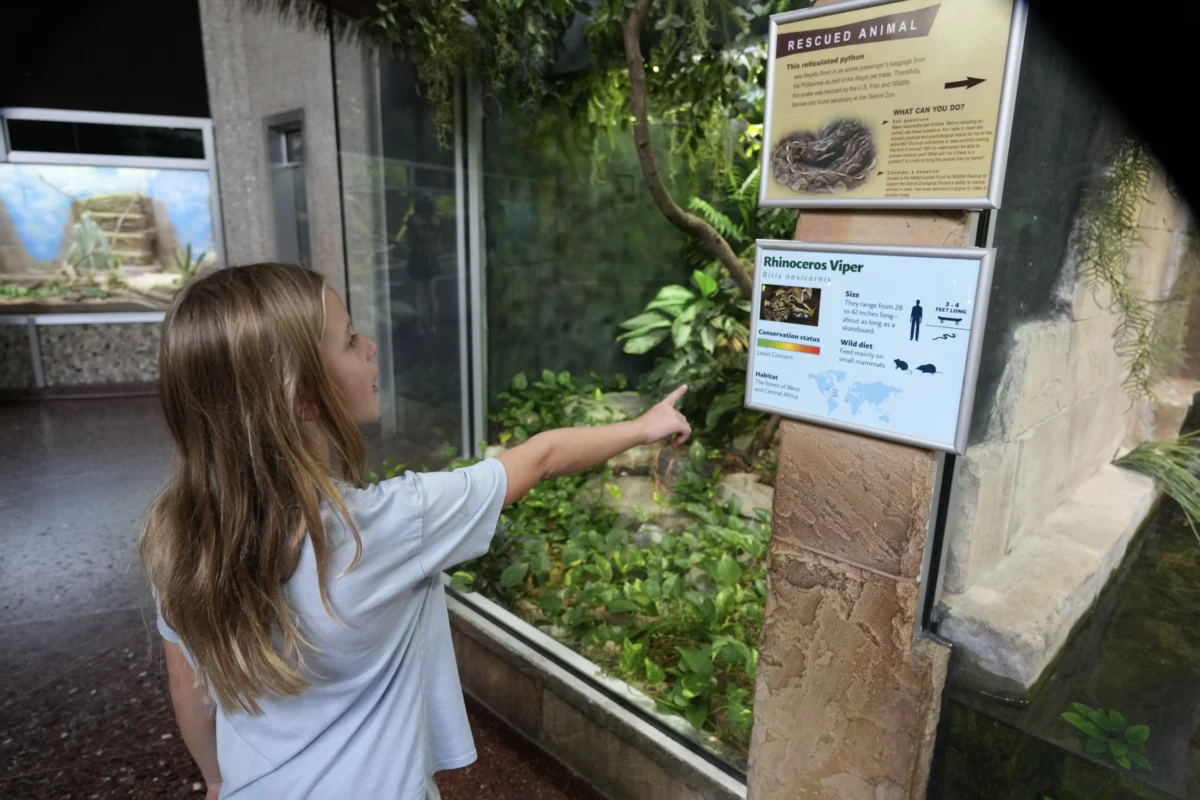
"A habitat that mimics a reptile's natural habitat is much better than a brick wall," Blanchard says. "We give them places to climb, places to hide — all things that they need."
Of course, Blanchard isn't the only zookeeper whose handiwork is featured inside the Conservation Center. Reine Sovey, a zookeeper who has been at the Detroit Zoo for three years, says that everyone at the Holden Reptile Conservation Center has made their own mark in some way.
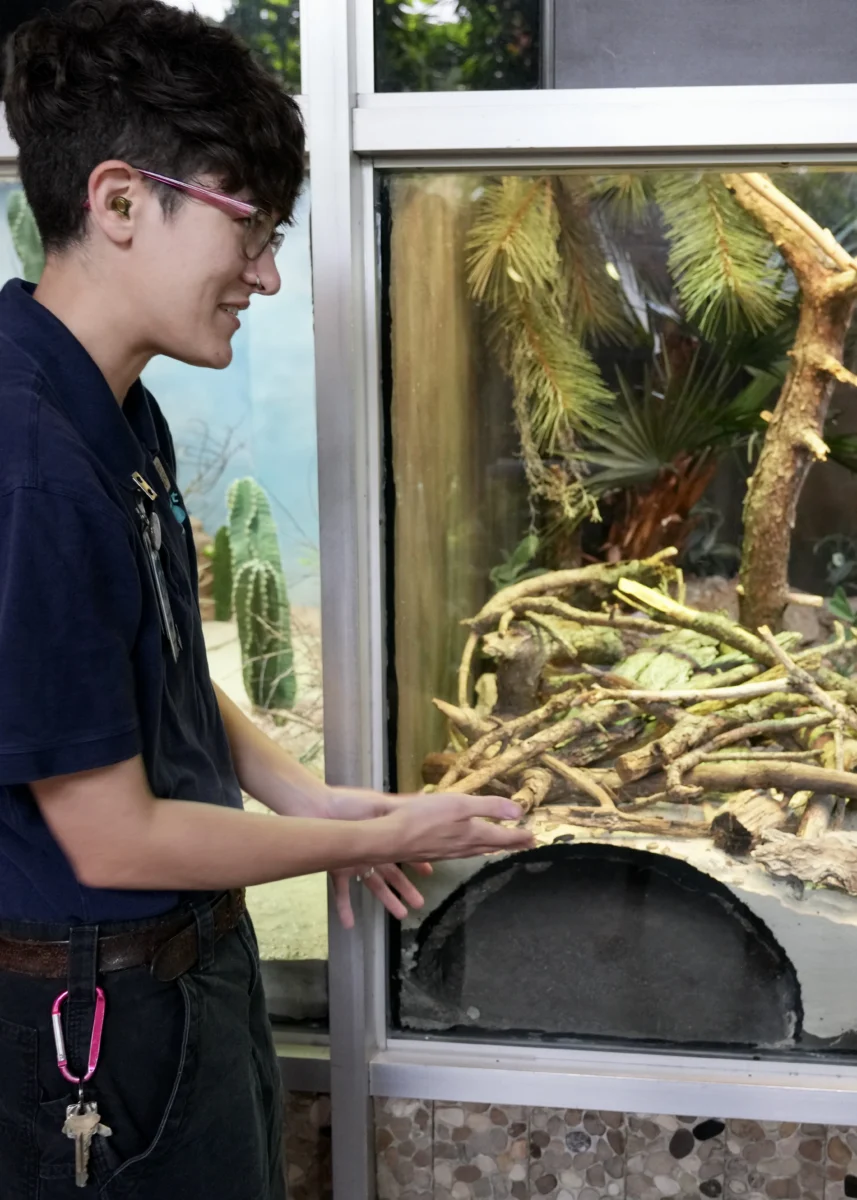
Sovey's most recent pride and joy is the eastern indigo snake habitat. After doing lots of research, they learned that these snakes use abandoned burrows and dead trees to hide and rest. Sovey wanted to create a feature that let the resident indigo snake exhibit this natural behavior while also making him more visible to guests. So, they designed an "underground" burrow that guests can peer into from the other side of the glass.
"I wanted to bring him up to the glass, and I had this idea that he would use a burrow — and he did," Sovey says. "It helps to know how an animal typically uses their habitat in the wild so I can try to recreate the opportunities they would have there."
While the habitat designs are designed for the animals, the zookeepers can't help but leave a few Easter eggs just for their team. And if you're looking close enough, you might spot some — like a foam skull buried in the sand of a habitat, poking up just enough to be visible to eagle-eyed guests.
"No one has called us out on it yet," Sovey says with a laugh. "I kind of hope it stays that way."
The secret skull — and all the other habitat designs — are on display year-round, but the reptile crew especially likes to keep things fun around the Halloween season. Visit during Zoo Boo, and you're likely to see witches on brooms, spooky faces and homages to classic horror films like Jaws.
Though zookeepers like Blanchard and Sovey enjoy having fun with the habitats, they agree their driving force is ensuring the reptiles in their care have full, enriching lives with habitats that support them.
"Working on habitats is one of the most rewarding things ever," Sovey says. "I love creating spaces where the animals feel safe and comfortable. I also love giving people a glimpse into a reptile's native habitat. I think it's important for people to understand that reptiles need this space and have special, complex behaviors and needs. That's all part of our mission to create meaningful connections between people, animals and the natural world so all can thrive."