Twin Win: Zoo Celebrates Birth of Red Panda Cubs and the Valuable Learnings That Came With Them
September 20, 2024
Animals
By Karen Dybis
All pregnancies bring new challenges, but the need for care and support is heightened when the mom is a 3-year-old red panda who’s about to be a parent for the first time.
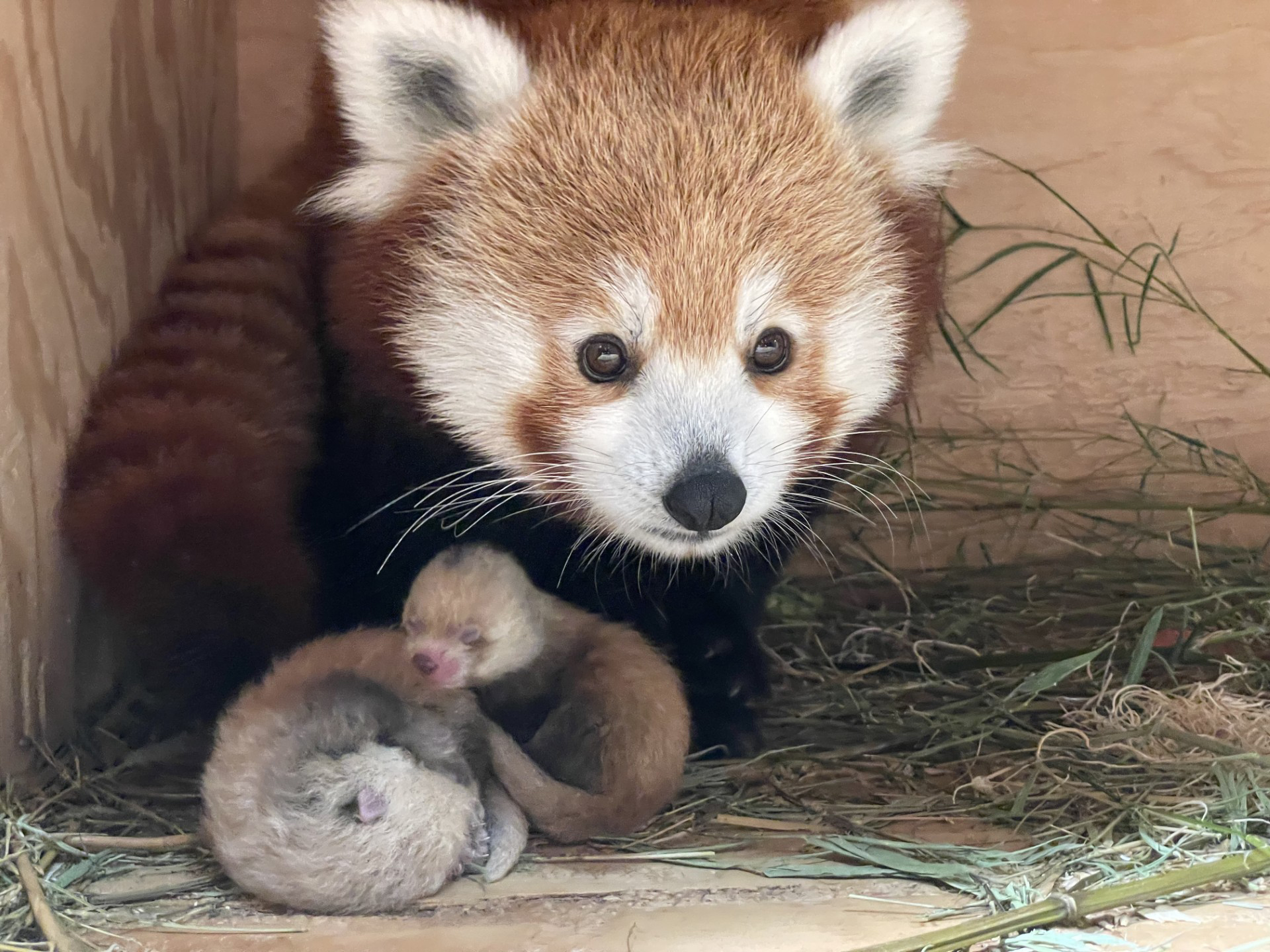
The Detroit Zoo is celebrating both the birth of a surprise set of twin red pandas as well as the work that went into a successful pregnancy for mom Ginger. The learnings around her gestation will inform the Zoo’s efforts toward red panda conservation not only in metro Detroit but around the world.
Ginger has become a great mom to the female cubs, named Patti and Ponya, who were born June 17, says zookeeper Sarah Allan, who was instrumental in supporting Ginger during her pregnancy. Allan’s observations on how a red panda prepares for motherhood also will be shared with the Detroit Zoo’s conservation partners.
This birth story starts with the partnership between Ginger and Ravi, a 7-year-old male red panda. This was their second breeding season together, and the Zoo was hopeful for a pregnancy. Ginger reached maturity in 2023, but that first season didn’t produce a pregnancy, Allan says.
To prepare for and evidently track a pregnancy, Allan started ultrasound training with Ginger last year. What does that involve, exactly?
“Red pandas are very food-motivated, and Ginger loves grapes,” Allan says. “That made her very cooperative with the training. It was easy once she got used to the machine and the sound it made.”
Allan says she and other zookeepers brought the duo together earlier this year and gave them lots of time. Before too long, the Zoo team prepped the ultrasound machine, got the grapes ready and confirmed that Ginger was expecting. As things progressed, Allan noticed Ginger started making nests of grasses, bamboo and straw inside her behind-the-scenes habitat area. To Allan, this nesting behavior was a natural and positive sign that all was going well with the pregnancy.
Red pandas have an average gestation period of 134 days, so Allan and the other zookeepers had a window when they thought Ginger might give birth. They kept a keen eye on Ginger throughout her pregnancy, providing her with supplemental food as well as any additional materials to bolster her nesting.
And there were a lot of ultrasounds. Ginger enjoyed her grapes each time, Allan says. “You have to make sure you get a good image, just like in a doctor’s office,” Allan says.
However, Ginger had one secret that she kept until she gave birth: She was carrying twins. The ultrasounds showed only one baby throughout the pregnancy, Allan says. So when Ginger gave birth to two healthy cubs, the Zoo was ecstatic. A veterinary visit later confirmed Ginger had two daughters. The team continued to provide Ginger and her cubs the highest quality of care after the birth, which included temporarily closing the pedestrian rope bridge over their outdoor habitat to give them all the peace and quiet they needed.
Red pandas are an endangered species with fewer than 10,000 in existence; the current number is likely around 2,500, says Dr. David Dimitrie, Detroit Zoological Society (DZS) director of conservation. Dimitrie says the Detroit Zoo supports red panda conservation in the wild, working with organizations such as the Association of Zoos & Aquariums (AZA).
“Numbers in the wild are quickly dwindling,” Dimitrie says. “With numbers so low, it’s great that we have Ravi and Ginger as educational ambassadors to teach our guests about conservation and conservation challenges in the field. We work with the Red Panda Network and AZA with the hope of helping animals in the wild.”
Observing Ginger’s pre-mating behaviors, pregnancy and successful birth are all things the DZS and its staff can share with their national and international partners. Plus, Zoo visitors eager to meet the twin red pandas can help with conservation efforts, like maintaining a quiet space for the young mother to take care of her girls.
Betsie Meister, associate curator of mammals, spoke with us in early August about the process of Ginger’s care and the pride the team felt about their shared success.
“The No. 1 goal was to set Mom up with everything she needed, like extra food because she’s a nursing mom or nesting materials so she can take care of the cubs, who will be with her for about three months. The building they’re in also is air-conditioned, so they’re comfortable in the summer. We also have cameras and microphones in case we need to step in, but it’s best if Mom is the one in charge.
“Ginger has been so attentive; her maternal instincts kicked in right away. We’re so proud of how she’s taking care of them — she’s doing a great job. They’re giant fluff balls now, taking their first steps and getting ready to explore the world soon enough.”